
By Ed Anderson
I have been coming over to South Africa 2 or 3 times a year for the last 6 years. South Africa has an incredible biodiversity and is ranked among the top 3 most biodiverse countries in the world, often placed 3rd behind Brazil and Indonesia. But despite this, there is a lurking problem here that is prevalent across South Africa and beyond, including in the UK…
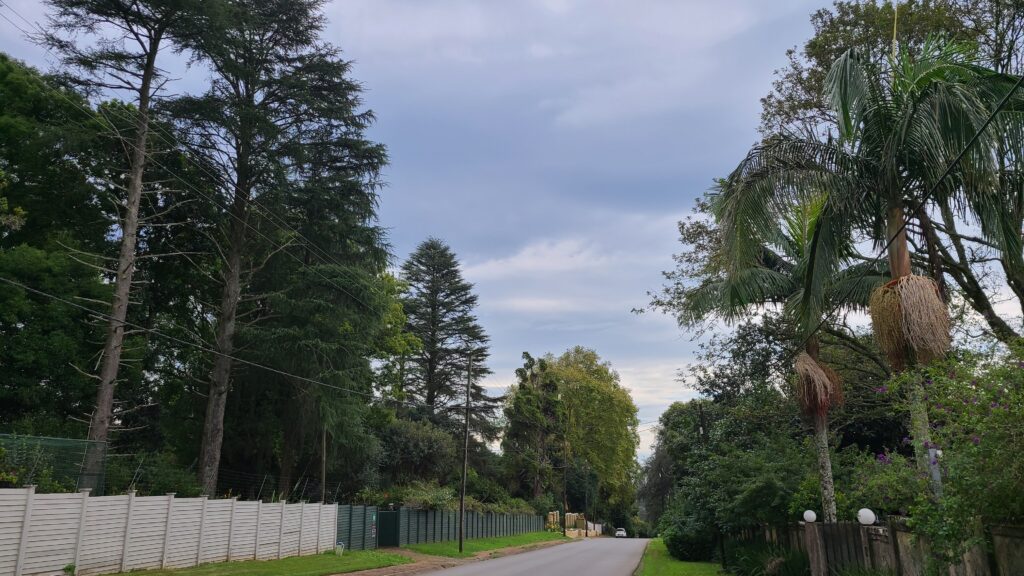
I’m driving through Hilton, a small, picturesque, English-country-style town nestled on the escarpment above Pietermaritzburg, KwaZulu-Natal. It is very green here. There are plenty of mature trees, planted since the mid-1800s by British and Dutch settlers to replicate the estates of their ancestral lands in Europe and the UK. Many of these are non-native and ornamental, including many large English oak trees planted by the Voortrekkers, early dutch trekkers who often carried acorns with them from the Cape during the Great Trek of 1836-1837. Whatever the origin, a simple google map search highlights how green and tree-rich this area is: quite European; lush: not your stereo-typical African image.
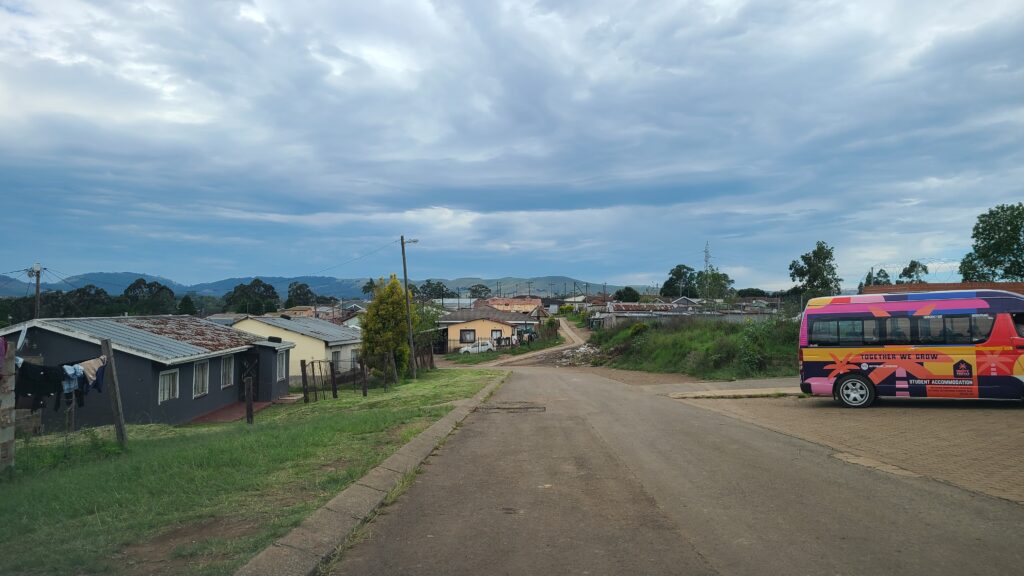
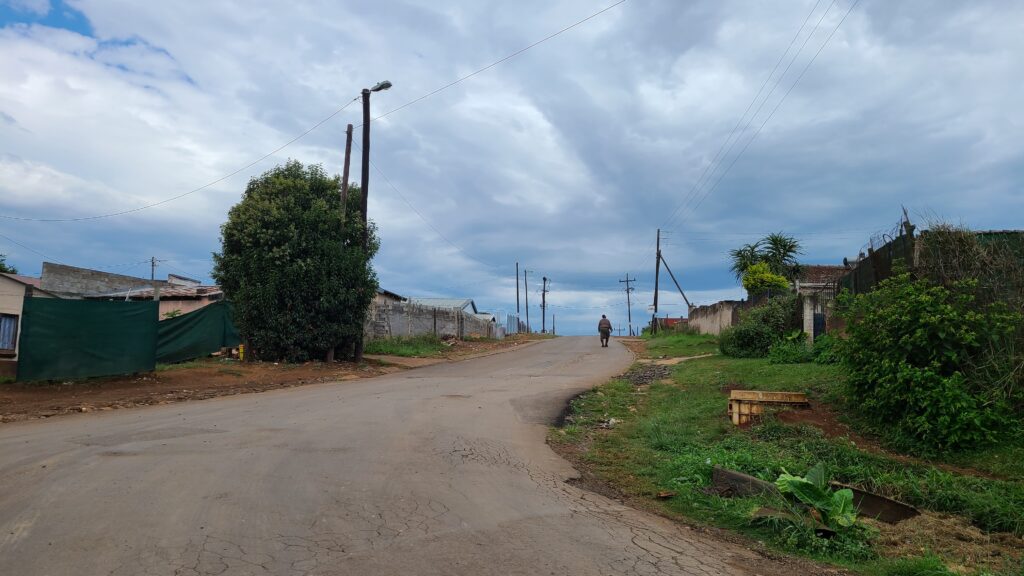
My drive takes me down the hill north of Hilton, past a settlement called Sweetwaters. Sweetwaters is an expansive, sprawling, unplanned settlement, almost entirely inhabited by black South Africans. The majority of residents here are Zulu, with some immigrant workers from neighbouring countries. Many residents commute up the hill to Hilton to work. The average income here is relatively low, and poverty and unemployment are common. A significant portion of households earn between R800 (£18) and R3,200 (£144) per month.
But there is another difference here: there is very little tree cover. Streets are generally bare of trees and other vegetation, with very few trees over 5m tall.
There have been various recent studies across the world shining a light on the importance of trees in towns and cities.
In Leipzig, Germany, researchers investigated how tree cover influenced the prescription of antidepressants. Their study followed almost 10,000 people and those living within 100m of a high density of street trees were less likely to have antidepressant prescriptions. This effect was even more marked for individuals with low socio-economic status.
A Canadian study showed that the proportion of tree cover in the school environment in Toronto was a significant predictor of learners’ performance. They found that the greatest impact of the tree cover was in schools that had the most external challenges. “Our results suggest that urban school districts can improve children’s academic performance by increasing tree cover, in particular by focusing on socio-economically disadvantaged schools,” they write. This green effect benefited learners of all ages.
However, in South Africa green spaces are usually only in affluent areas. The majority of its city residents live under “green apartheid”, according to the authors of a 2020 research paper looking at the distribution of green infrastructure in South African cities.
This paper looked at the distribution, abundance, and accessibility of both public and private urban green infrastructure (UGI) across the country’s urban areas. Researchers found a massive disparity in vegetation between different neighbourhoods:
- Vegetation Disparity: White-majority neighbourhoods have 11.7% greater tree cover and 8.9% higher overall vegetation greenness (measured via NDVI satellite data).
- Proximity to Parks: White residents live, on average, 700 meters closer to a public park than Black African residents.
There are other reasons why there are few trees in places like Sweetwaters. The tree-less nature of such places seem also to beinfluencedby 3 main factors:
- The “Wood-Fuel” Legacy: For over a century, Sweetwaters served as a primary source of firewood for the growing city of Pietermaritzburg. Indigenous trees were harvested for cooking and heating long before the area was electrified. There are well-documented health hazards associated with burning wood indoors.
- Livestock Grazing: Because the land is largely communal or traditional, it has been used for cattle and goat grazing for generations. Constant grazing prevents saplings from maturing, keeping the hillsides as open pasture.
- Fire Cycles: To maintain healthy grass for cattle, the area is frequently burnt (either intentionally or via runaway winter fires). These hot grass fires kill young trees before they can establish a canopy.
The researchers of the above paper concluded that Urban Green Infrastructure (UGI) is not a luxury: it provides essential “ecosystem services” like cooling (mitigating the Urban Heat Island effect), flood control, and mental health benefits. The lack of these services in townships across South Africa creates a double burden of social and environmental vulnerability.
Green initiatives in KZN addressing plant poverty.
There are initiatives underway in KZN that are attempting to shift the idea of urban greening from an aesthetic luxury to essential “ecological infrastructure” for low-income and vulnerable communities. The eThekwini “Community Reforestation Project” (in Buffelsdraai, near Durban), linked to a renewable energy development, allows local “treepreneurs” from nearby low-income communities to grow indigenous trees in exchange for credit notes used for school fees, food, and tools. These trees create a carbon sink and a buffer zone that improves local air quality and reduces heat for surrounding residents.
As I continue my journey past the streets of Sweetwaters, and up the hill and back into Hilton, I think about more familiar places. For those working in arboriculture and town planning in the UK, the story is a familiar one. The same differences in affluence compared to an increased or decreased quality of plant environment can be seen across the UK. People living in lower income areas suffer from a lack of regular access to green spaces and the benefits they offer, in health, education and general well-being, not to mention climate resilience.
What can we in the UK learn from the story of ‘green apartheid’ in South Africa? How easy is it to see the negative impacts of a lack of trees in someone else’s country without noticing a similar pattern in our own?
References
- “Green Apartheid: Urban green infrastructure remains unequally distributed across income and race geographies in South Africa”
- South African cities need more trees –– for the health and safety of their residents
- Collection of urban tree products by households in poorer residential areas of three South African towns
- Urban street tree biodiversity and antidepressant prescriptions
- Tree cover and species composition effects on academic performance of primary school students
- An Assessment of a Community-Based, Forest Restoration Programme in Durban (eThekwini), South Africa