By Joe Robson – Dec 2025.
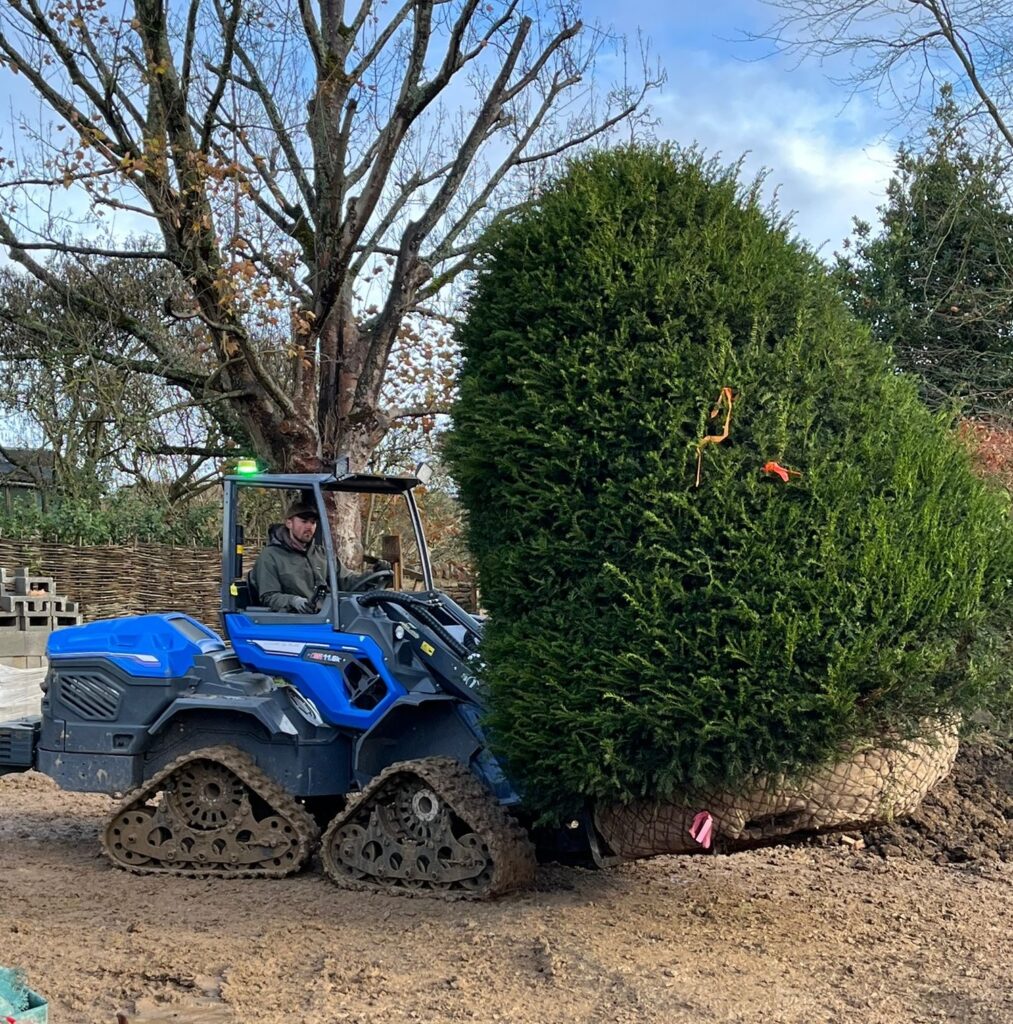
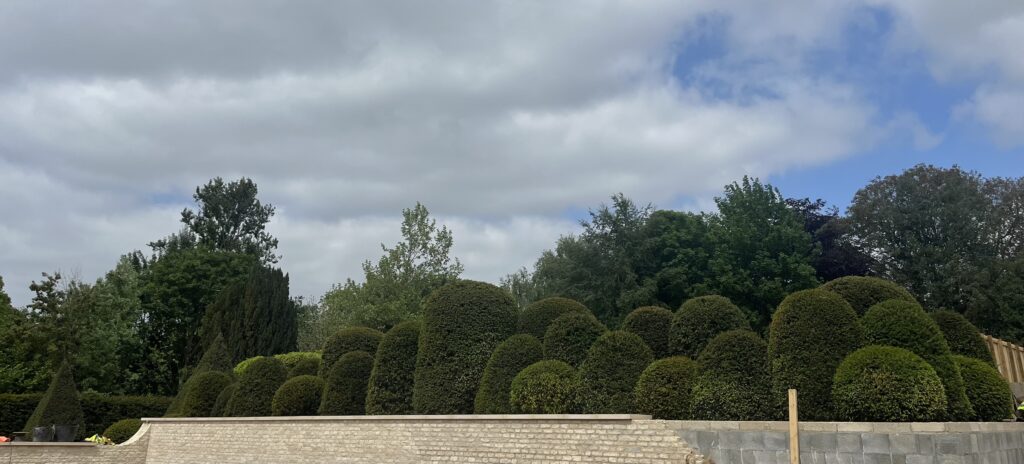
At Barton Hyett Associates we’ve recently stepped up our tree planting efforts. We focus on large feature trees and we’ve planted a lot of cloud hedging and topiary using common yew. We’ve planted so many, that yew trees seem to have become my mind’s screensaver, and so in a bid for a factory reset before Christmas, I’ve written a blog post all about them…
The yew tree’s scientific name is Taxus baccata. ‘Taxus’ being the genus and ‘baccata’ being the species; look up Carl Linnaeus’ work for more information on the classification of flora and fauna. It’s a slow-growing evergreen with flat, needle-like foliage and textured, reddish-brown bark. It’s also dioecious meaning individual yew trees are either male or female; the distinctive red berries being found on the female trees.
Most of the yew tree (excluding the flesh of the berry) is poisonous to humans and animals but, paradoxically, it’s one of the chief compounds used in a number of chemotherapy drugs – if you see a medicine with the letters ‘Tax…’ in the name, its likely that it’s made from yew.
Unlike trees such as western red cedar (Thuja plicata), yew trees have lots of ‘latent’ buds. This means that when your friendly local tree surgeon drops round to cut your neighbour’s trees in half and knock some branches off to ‘let some light in’, the yew tree may regrow whilst the western red cedar won’t.
Pest and disease wise, there’s not much to worry about. The fungal fruiting body, chicken of the woods (Laetiporus sulphureus), is often found on mature yew trees and, whilst it can cause limb or stem failure, the decay on it’s yew host is very slow; i.e. decades or even centuries. There’s also a relatively under-researched and likely under-recorded fungi called Dothiora taxicola (not to be confused with Dothistroma septosporum which causes ‘red band needle blight’ on pine trees). This fungi is generally considered to be saprophytic – it eats dead, rather than live wood, however, it can also be parasitic. It presents as small black dots on the underside of needles and is likely fairly inconsequential, hence the under-reporting.

When considering pests and diseases on yew, the most likely cause of death is Phytophthora sp. This is an ‘oomycete’ – neither a fungus, nor a bacteria, which rots roots and kills trees; the word derives from the Greek for ‘plant destroyer’. When planting yew trees, always make sure the planting pit and ground around is free draining and don’t over-water them. If the roots become water-logged, this water dwelling oomycete won’t be far behind.
Alternatively, contact Barton Hyett Associates and we’ll plant them for you, though I’d be happy to help you choose another species next year!